

Last Updated: November 14, 2026
Quick Summary
Choose durable graphic shirts by checking fabric weight and weave, print method, and construction details before you buy. Midweight ring-spun cotton around 180 g/m² with a ribbed collar, shoulder tape, and a flexible print holds up best, and washing cold inside out keeps the graphic alive.
- Industry standards often require only 15 to 20 wash cycles, while shoppers expect closer to 50.
- Stretch the print gently before buying; cracking or stiff raised ink is a warning sign.
- Wash printed tees inside out at 30°C or 90°F maximum and skip fabric softener.
- Tumble dry low or hang dry, since high heat is what cracks prints.
- A shirt that passes shrinkage, pilling, seam, and print checks after ten washes is genuinely durable.
Table of Contents
- Why Most Graphic Shirts Fail Before the Day Is Over
- What to Check Before You Buy Durable Graphic Shirts
- Durable Cotton Graphic Tees: What the Fabric Actually Tells You
- How to Wash Graphic T-Shirts So the Print Survives
- Graphic Tees for Outdoor Activities: Fit and Fabric for the Trail
- All-Day Comfort: What Separates a Wearable Shirt From a Novelty Tee
- Price, Value, and What You're Actually Paying For
- Find Your Next Everyday Shirt at 4est Clothing Company
- Frequently Asked Questions
Why Most Graphic Shirts Fail Before the Day Is Over
Many shirts never survive a full day of real wear.
At 4est Clothing Company, we started our store because we wanted to sell quality shirts, not run-of-the-mill tees that look the same as everything else on the shelf.
Here is the uncomfortable truth. Industry durability standards often only require garments to survive 15 to 20 wash cycles, according to industry durability standards analysis.
What to Check Before You Buy Durable Graphic Shirts
Before you add anything to a cart, run through three checks: fabric weight and weave, print method, and construction details. These predict whether a shirt will still look good after a season of wear far better than the price tag does.
Fabric Weight and Weave
Fabric weight tells you how substantial a shirt feels and how well it resists thinning. Midweight cotton in the 180 g/m² range, like the fabric in our National Park After Dark Freaks tee, balances breathability with enough body to hold a print and keep its shape.
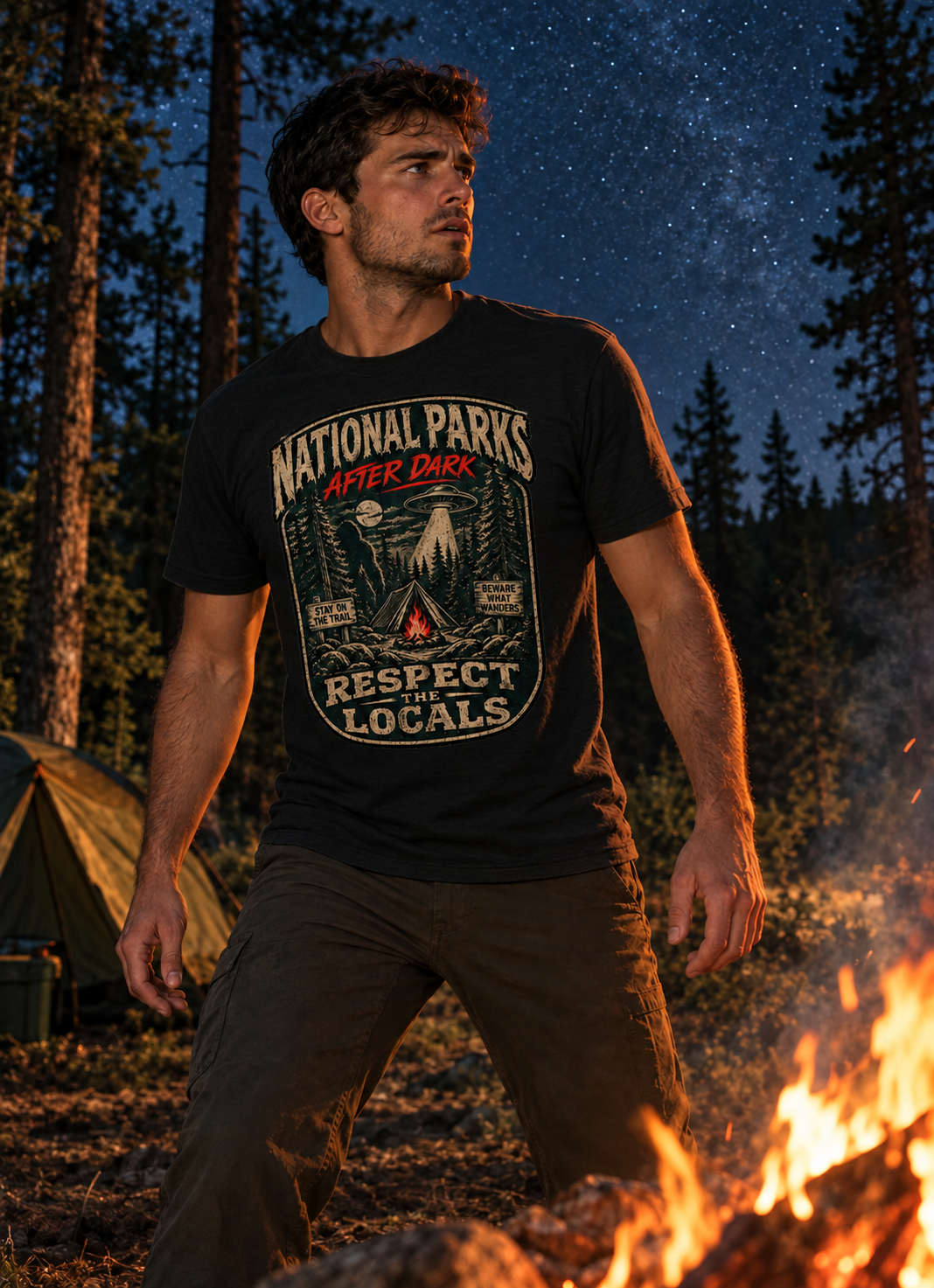
Lighter fabrics feel softer and cooler for hot afternoons but can show wear faster under heavy use. A tight, even weave matters too: hold the shirt up to light, and if you can see straight through it, expect a short life.
Print Method and Graphic Durability
Print method decides whether your graphic survives the wash. Our shirts use a dual-printing approach: DTF for sleeves and labels, and DTG for main artwork.
Check the print by stretching the fabric gently where the graphic sits. A print that cracks or feels stiff and raised is a warning sign.
Construction Details That Signal Longevity
Small construction choices separate a shirt built to last from one built to sell:
- Tubular knit with no side seams for a cleaner drape and less twisting in the wash
- Ribbed collar and shoulder tape to stop stretching at the neck and shoulders
- Tear-away labels so nothing scratches during a long day
- OEKO-TEX® certification for tested, safer materials
Durable Cotton Graphic Tees: What the Fabric Actually Tells You
Durable cotton graphic tees come down to fiber quality and how the fabric is spun, but the label alone will not tell you whether a shirt survives a season. Our Happy Hairyman camping tee is made from ring-spun cotton, though the label alone will not tell you whether a shirt survives a season.

Price will not tell you this. A University of Leeds textiles study tested 47 t-shirts through repeated wash and wear cycles and found that higher-cost shirts did not consistently outperform cheaper ones.
What that means for you: read the fabric spec, not the price tag. Look for ring-spun or combed cotton, a stated fabric weight, and a certification like OEKO-TEX® STANDARD 100.
A Five-Point Durability Check You Can Do at Home
A useful test is to measure what happens after washing. Use this checklist on any graphic tee you are considering, whether it is ours or another brand:
- Shrinkage. Measure the chest and body length flat before the first wash, then again after several cold washes and low-heat drying.
- Pilling. Rub the fabric against itself in the same spot, then inspect under bright light for small fiber balls.
- Seam strength. Tug gently at the side seam, shoulder seam, and armhole. Stitching should hold without gaping or loose thread ends; look for double-needle stitching at hems and shoulders.
- Colorfastness. Wash a new shirt with a white cotton towel. If dye transfers onto the towel, the print or body color will fade faster than expected.
- Print condition. After each of the first three washes, stretch the graphic gently and check for hairline cracks along fold lines, edge lift, and dulling. A print that still looks crisp and flexible after three cycles is likely built to last.
Judging a shirt only by its first-wear feel can hide failures that show up after washing, so check shrinkage and print condition before deciding a tee is durable.
Fabric and Construction Comparison
Weight, blend, and construction decide how a shirt behaves over a long day, and they trade off against each other. Use this comparison to match the shirt to how you actually wear it:
| Fabric or Feature | What It Does Well | Trade-off |
|---|---|---|
| Lightweight cotton (around 150-160 g/m²) | Breathable in heat, soft hand-feel | Thins and shows wear faster under heavy use |
| Midweight cotton (around 180 g/m²) | Holds shape and print, balances breathability | Warmer in peak summer |
| Heavyweight cotton (200 g/m² and up) | Very durable, structured drape | Slower to dry, stiffer at first |
| Cotton-polyester blend | Resists shrinkage and wrinkles | Less breathable, can pill at friction points |
| Ring-spun or combed cotton | Smoother, stronger yarn, less pilling | Usually costs more than open-end cotton |
| Tubular knit (no side seams) | Less twisting and torque in the wash | Less tailored fit through the waist |
| Ribbed collar with shoulder tape | Resists neck stretch and shoulder sag | Slightly heavier feel at the neckline |
Shirts built for frequent, all-day wear typically combine a midweight ring-spun body with a ribbed collar, shoulder tape, and a print method matched to the artwork. That combination keeps a graphic tee wearable from morning through evening without turning into a shapeless rag after a month.
How to Wash Graphic T-Shirts So the Print Survives
Washing graphic T-shirts correctly is the easiest way to double a shirt's useful life. The rules are simple and apply to every printed tee you own:
- Turn the shirt inside out before washing to protect the print from friction against other garments and the drum.
- Wash cold, at 30°C or 90°F maximum, with similar colors.
- Skip fabric softener; it coats fibers and dulls prints over time.
- Tumble dry low or hang dry. High heat is what cracks prints.
- Do not iron the graphic and avoid dry cleaning on printed cotton.
Drying a printed tee on high heat can crack the graphic, so tumble dry on low.
Why Prints Fail in the Wash
Print damage is not random. It follows a few predictable mechanisms, and knowing them makes the care steps make sense.
- Heat exposure. Repeated high heat can stiffen printed artwork and make it crack along fold lines.
- Mechanical abrasion. The drum and other garments rub against the print surface. Inside-out washing and washing with similar fabrics reduce that friction.
- Detergent residue and softener coating. Fabric softener and excess detergent leave a film on the ink that dulls color and can trap grit that abrades the print.
- Chemical attack. Chlorine bleach and some stain removers degrade both dye and ink, causing fading and edge lift.
- Improper drying position. Hanging a wet shirt by the shoulders stretches the neckline; hanging by the hem or drying flat preserves shape.
Drying and Storage That Preserve Fabric and Artwork
How you dry and store a shirt matters as much as how you wash it.
- Air-dry when you can. Hang the shirt by the hem or lay it flat on a drying rack. Avoid direct sun for long periods, which fades both body color and print.
- If you use a dryer, choose low heat and remove the shirt while slightly damp. High heat and over-drying are the two biggest causes of print cracking and shrinkage.
- Fold, do not hang, for long-term storage. Hanging a knit tee stretches the shoulders over time; fold it and store in a dry drawer.
- Keep stored shirts out of damp spaces. Moisture encourages mildew and weakens cotton fibers.
- Rotate your shirts. Wearing the same graphic tee every day accelerates wear at the collar, underarms, and print flex points; a rotation of several shirts spreads the wear and extends each one's life.
A Wash-Test Log for Measuring Durability
If you want to know whether a shirt is truly durable, track it. Keep a simple log for the first ten washes and record four things: shrinkage (measure chest and length flat), pilling (inspect under bright light), seam condition (check side, shoulder, and armhole seams), and print condition (stretch the graphic and look for cracks or edge lift). A shirt that still passes all four after ten washes is a genuine all-day shirt; one that fails early tells you to change brands or care habits.
Graphic Tees for Outdoor Activities: Fit and Fabric for the Trail
Graphic tees for outdoor activities need a different balance than a shirt you wear to the coffee shop.
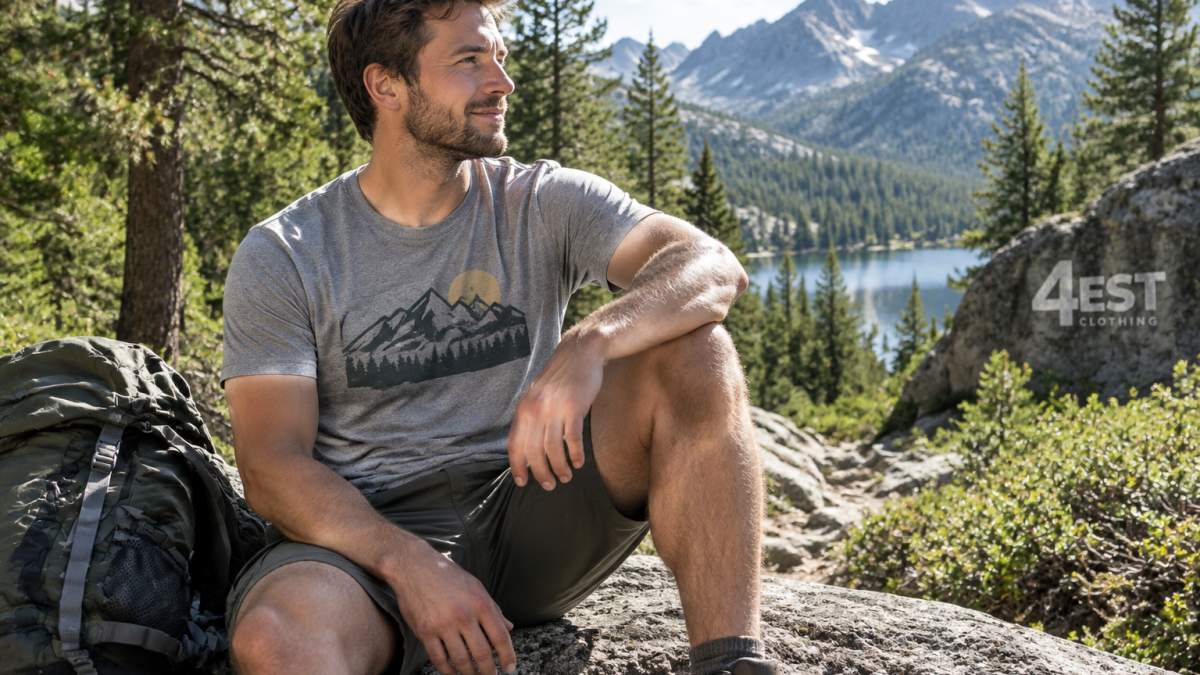
A relaxed, slightly boxy cut works better on the trail than a slim fit because it lets air move and does not bind across the back. Midweight cotton handles cool mornings; a lighter ring-spun tee like our retired fishing shirt suits warm-weather casting and long days on the water.
All-Day Comfort: What Separates a Wearable Shirt From a Novelty Tee
All-day comfort is the difference between a shirt you reach for every weekend and one that hangs in the closet.
Comfort comes from three things: a soft hand-feel from the first wear, a breathable fabric weight matched to the season, and seams and labels that do not distract. Our fishing tee is built for a soft feel from the start.
Fit matters just as much. A comfortable fit across the chest and shoulders, with a size range that matches the chart, keeps a shirt wearable from morning through evening.
Price, Value, and What You're Actually Paying For
Price is a poor shortcut for quality, but value is a real calculation. The Leeds research makes the case plainly: expensive shirts are not reliably more durable. So what are you paying for when a shirt costs more than a big-box basic?
| What You're Comparing | Budget Basic | Quality Graphic Tee |
|---|---|---|
| Fabric | Standard cotton, often thin | Ring-spun, stated weight |
| Print method | Single method, prone to cracking | DTG plus DTF detail |
| Construction | Side seams, basic collar | Tubular knit, shoulder tape |
| Certification | Rarely stated | OEKO-TEX® STANDARD 100 |
| Lifespan | Fewer wash cycles | Built to hold shape and print |
Our shirts are priced at $32 to $34. Value over time comes down to cost per wear: a shirt that lasts three seasons beats three cheap shirts that each last one.
Find Your Next Everyday Shirt at 4est Clothing Company
We built 4est Clothing Company around a simple idea: outdoor-inspired shirts that feel good on day one and still look good a year later.
Start with the Happy Hairy Guy backprint tee for an everyday graphic with personality, or browse the full collection to find the design that fits your adventures.

The challenge is simple: stop replacing graphic tees every season.
Frequently Asked Questions
What makes a graphic T-shirt durable?
Three things decide it: fabric weight, print method, and construction. Medium-weight cotton around 180 g/m² is one option to look for. Look for ribbed collars, shoulder tape, and tubular knit construction without side seams. Check the fabric and construction specs when comparing shirts.
How should you wash graphic T-shirts to help them last?
Turn the shirt inside out, wash cold on a gentle cycle, and skip fabric softener. Tumble dry on low or hang dry. Avoid ironing directly over the print and never dry clean a printed tee.
Are graphic tees comfortable enough to wear all day?
They can be, if the fabric is breathable and the cut is relaxed. Lighter cotton can suit warm weather, while medium-weight cotton is a versatile option.
What should you look for in graphic tees for outdoor activities?
Prioritize breathable fabric, a fit that allows movement, and a print that won't crack when you're active. Medium-weight cotton with a relaxed crew neck is a practical choice for outdoor wear. Check the size chart before ordering. A shirt that holds its shape after repeated wears is the one worth packing.
